一物不废,万物共生:埃里丝绸的生命美学
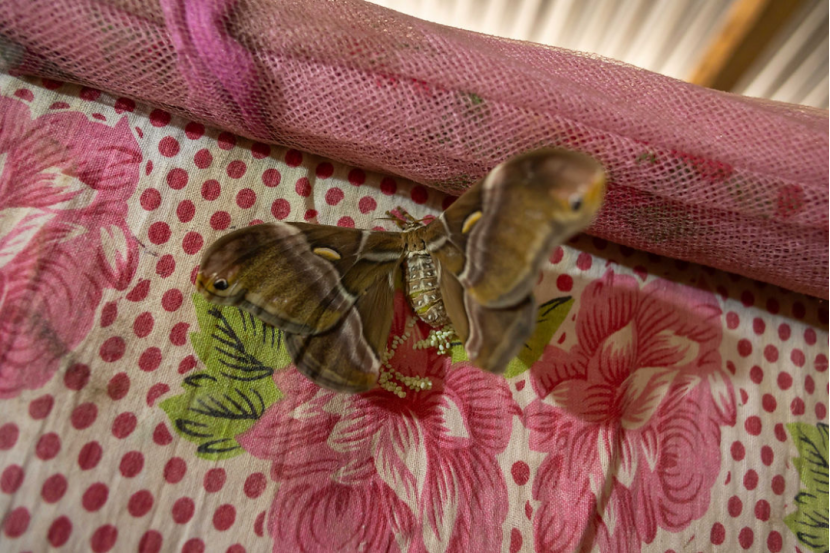
Eri silk is something truly special–a fabric that’s not only exceptionally comfortable and durable, but also rooted in tradition and crafted by hand in harmony with nature. This isn’t just another type of silk; it’s a textile with a unique story.
埃里丝绸魅力独具,它远非寻常面料,而是一门深植传统、诠释天人和谐的手工技艺。这匹纺织珍品,正亲口诉说其非凡传奇。
The silkworm
灵蚕之源
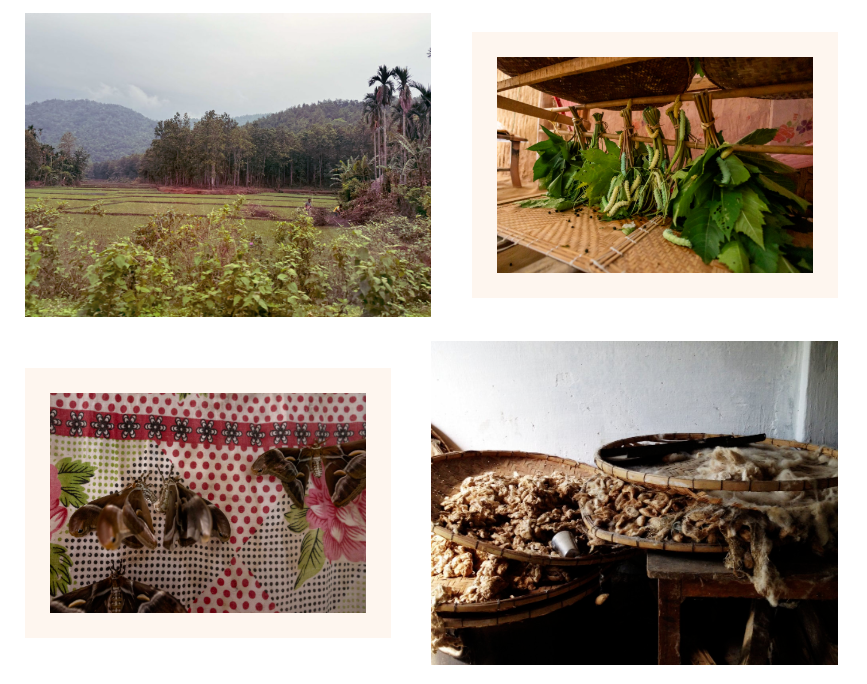
Eri silk comes from two species of silkworms, Samia ricini and Philosamia ricini, which thrive in the wild and on small farms, mostly in northeastern and eastern India. These species are also found in parts of China and Japan, and have been more recently introduced into Thailand.
埃里丝绸(Eri silk)源自两种野生蚕蛾——蓖麻蚕(Samia ricini,亦作Philosamia ricini),它们主要栖息于野外和小型农场,广泛分布于印度东北部和东部地区。这两种蚕蛾亦见于中国和日本部分地区,近年来也被引入泰国。
The name “eri” comes from the Assamese word “era,” meaning “castor,”because these silkworms feed on the leaves of the local, indigenous castor oil plant; a plant which is also drought resistant and requires vastly less water than the mulberry tree, grown to feed mulberry silk worms. This diet of castor leaves gives Eri silk its distinctive texture and contributes to its sustainability, making it a fabric of choice for those interested in eco-friendly materials. The production of India's Eri silk takes place almost entirely in village-based setups in the Northeast: Assam accounts for 38.3% of India’s Eri silk production, Meghalaya 22.6%, Manipur 29.8 % and Nagaland 6.8 %.
“埃里(Eri)”其名源于阿萨姆语“era”,意为“蓖麻”。这些蚕以当地原生的蓖麻树叶为食。与喂养桑蚕的桑树相比,蓖麻具有更强的耐旱性,需水量也远少于桑树。以蓖麻叶为食不仅赋予了埃里丝绸独特的质地,也使其成为一种可持续的环保面料,深受环保材料爱好者的青睐。在印度,埃里丝绸的生产几乎全部集中在东北部的乡村:阿萨姆邦占全国产量的38.3%,梅加拉亚邦占22.6%,曼尼普尔邦占29.8%,那加兰邦占6.8%。
Eri silkworms produce cocoons in a range of natural shades, from creamy white to a rich red-brown. To increase the quantitiy of red cocoons, worms are fed the leaves of a particular type of ficus tree in addition to their normal diet of castor leaves. The cocoons are separated after harvesting into white Eri and red Eri and produce two distinctly different shades of cloth.
埃里蚕结出的蚕茧拥有从乳白色到红棕色等一系列天然色泽。若在喂养蓖麻叶的基础上,额外给蚕喂食特定品种的无花果树(Ficus)叶片,便可增加红色蚕茧的产量。采收后,蚕茧会按颜色被分为白色埃里和红色埃里,二者最终能织成色泽迥异的布料。
Non violent silk?
无暴之丝
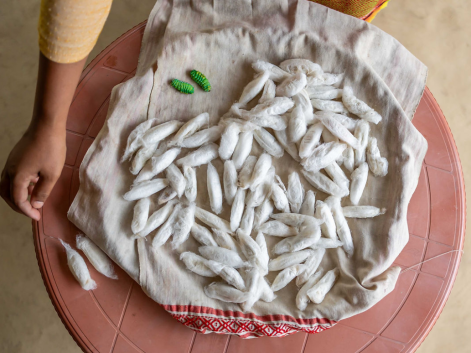
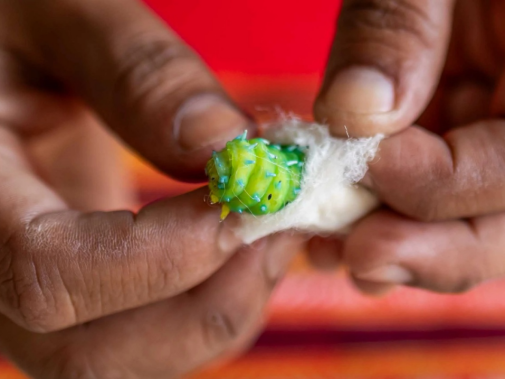
One of the most remarkable aspects of Eri silk is that it’s produced without harming the silkworms. Often referred to as “ahimsa silk”, “non-violent silk” or “peace silk,” Eri silk is harvested after the silkworms have completed their metamorphosis and emerged from their cocoons. This cruelty-free approach is a significant reason why Eri silk stands out in the world of ethical fashion.
生产埃里丝并不需要伤害蚕茧中的蚕虫。如此出众的特性也让埃里丝绸被誉为“非暴力丝绸”或“和平丝绸”。埃里丝的采收通常是在蚕完成蜕变破茧之后。这种零残忍的生产方式,是埃里丝绸在伦理时尚界独树一帜的重要原因。
Eri silk earns its reputation as a non-violent silk because of the unique way its cocoons are spun. Unlike other silkworms, which create their cocoons in a smooth, continuous strand, Eri silkworms spin theirs in a more erratic, zig-zag pattern. This difference means that the long, unbroken floss silk filaments typically associated with conventional silk - harvested after boiling the unbroken cocoon with the silkworm still inside–can’t be obtained from Eri silk cocoons. Instead, the fibre produced is a short staple, similar to cotton or wool. Because of this, the quality of the silk isn't affected when the moth emerges and breaks the cocoon to fly away.
“和平丝”的美誉源于蓖麻蚕独特的结茧方式。普通家蚕吐丝连续光滑,能形成完整蚕茧;而埃里蚕吐丝呈不规则锯齿状,无法形成长丝。因此,埃里丝无需像传统丝绸那样通过煮沸活蛹来获取连续长丝,其纤维本质就是类似棉毛的短纤维。这一特性使得蚕蛾破茧而出时,完全不会损害丝质。
In Eri silk production, this short staple fibre is usually spun and woven by hand, although mechanisation is gradually being introduced in India to streamline the process.
在埃里丝绸生产中,这类短纤维通常采用手工纺纱织造,不过印度正逐步引入机械化生产来优化生产流程。
The fibre
丝缕之韵
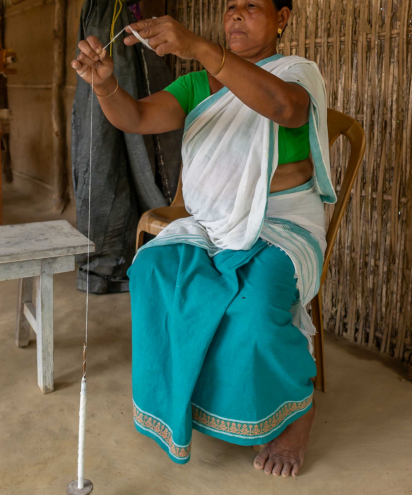
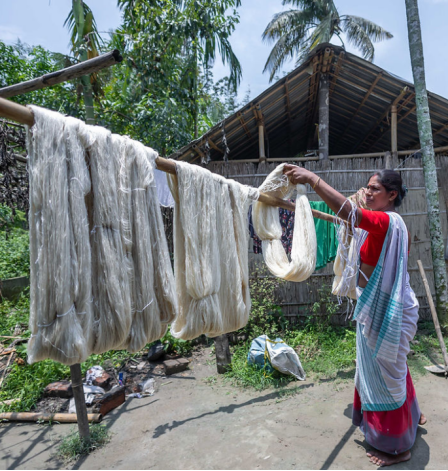
Eri silk production is deeply connected to the cultural heritage of the communities in northeastern and eastern India. It’s not a mass-produced textile; rather, it’s created by small-scale farmers and artisans using techniques that have been passed down through generations. In the main, the entire process–from rearing the silkworms to spinning and dyeing the yarn and weaving the fabric–is done by hand, often within the home or local cooperatives. All required inputs–from the fibre to the natural dyes –are local. This not only helps preserve traditional crafts but also provides a vital source of income for rural families, especially women, and results in an extremely low carbon footprint.
埃里丝绸的生产与印度东北部及东部社区的文化传统紧密相连。这并非大规模工业化生产的纺织品,而是由小农户和工匠沿用世代相传的技艺手工制作。从养蚕、纺线、染色到织布的全过程基本都在家庭或当地合作社完成,所用材料——从蚕丝到天然染料——皆取自当地。这种生产模式不仅保护了传统手工艺,更为农村家庭(尤其是女性)提供了重要收入来源,同时实现了极低的碳足迹。
The process of making Eri silk starts with rearing the silkworms, which are fed on castor leaves until they’re ready to spin their cocoons. Unlike other types of silk, the moths are allowed to emerge from the cocoon, leaving it open-ended. In the case the silk farmer wants to sell the pupae, they are extracted, alive, by hand. The cocoons are then boiled to soften the sericin, making it easier to extract the silk fibers.
埃里丝绸的制作始于养殖蓖麻蚕,这些蚕以蓖麻叶为食直至结茧。与其他蚕丝不同,埃里蚕会被允许破茧成蛾,形成开口茧。若蚕农需要出售蚕蛹,会手工取出活蛹,随后将蚕茧煮沸软化丝胶以便抽丝。
The cocoons are manipulated by hand, stretched and flattened into small “rotis” to separate fibres, dried and then spun into yarn by hand with a drop spindle, resulting in a fiber that’s shorter and more textured than other silks. This gives Eri silk its unique feel and durability. It’s handfeel is comparable to a soft, slubby cotton. The yarn can be left in its natural colour or dyed using plant-based dyes, keeping the process entirely environmentally friendly and carbon neutral.
工人们手工处理蚕茧,将其拉伸压平成小"薄饼"状以分离纤维,经晾晒后通过坠锤纺纱手工纺成纱线。以这种工艺制成的纤维比其他蚕丝更短且更具纹理,赋予了埃里丝绸独特的柔软手感和耐用性,其触感近似带有竹节纹理的柔软棉布。纱线可保留天然色泽或用植物染料染色,确保全过程环保且实现碳中和。
The cloth
锦裳之美
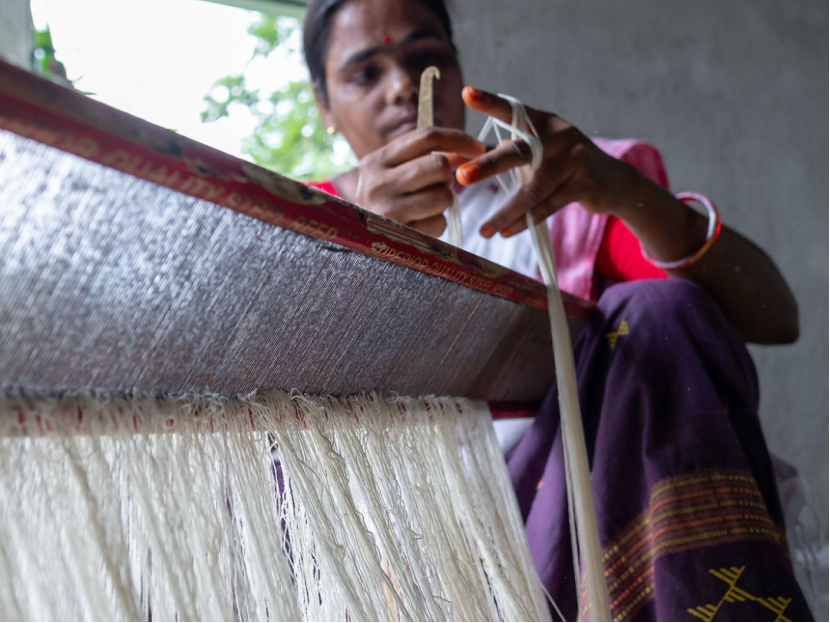
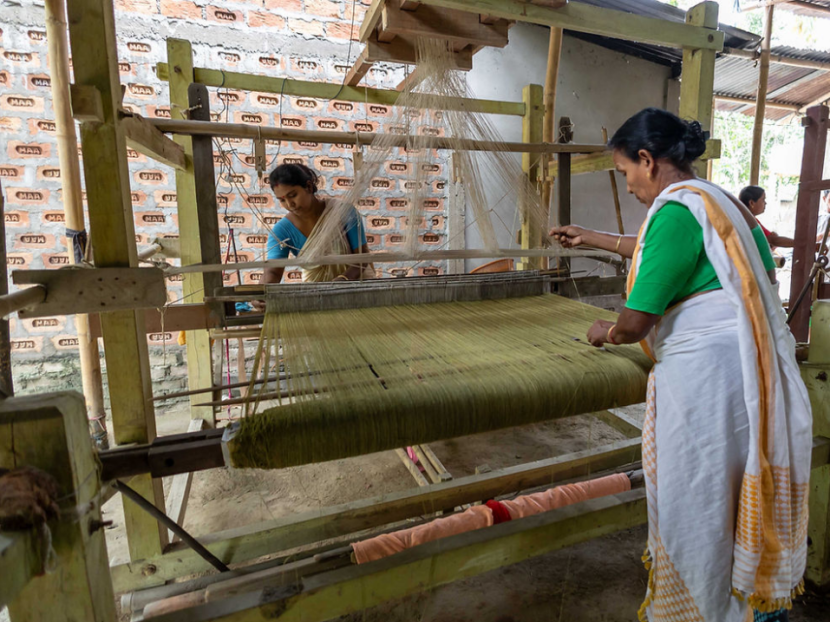
Skilled weavers then hand weave the yarn into fabric on traditional shuttle looms located in their homes or community centers, often incorporating patterns that reflect the region’s cultural heritage. After weaving, the fabric is finished and ready to be tailored into garments, accessories, or home textiles.
技艺娴熟的织工随后会在家中或社区中心的传统梭织机上,将纱线手工织成面料。这些织物常融入反映当地文化遗产的图案。织造完成后,面料经过整理便可裁剪制成服装、配饰或家居纺织品。
The cloth itself boasts remarkable thermal properties, keeping you warm in winter and cool in summer. The shorter fibers spun into the yarn increase its breathability. Its natural hydrophilic qualities allow it to absorb water and sweat effectively. The spun yarn gives it durability and a distinctive matte finish that at once has both a rustic charm as well as a contemporary edge. Available in a palette of natural shades, from creamy whites to earthy browns, Eri silk can be dyed easily without losing its soft texture. The fabric has a slightly slubbed feel and soft touch, growing more comfortable with wear.
这种面料本身具有卓越的调温特性,冬暖夏凉。纱线中的短纤维结构增强了透气性,其天然亲水特性可有效吸收水分与汗液。纺成的纱线不仅结实耐用,更拥有独特的哑光质感,既蕴藏质朴韵味,又兼具现代风尚。埃里丝绸自带从乳白到大地褐的自然色系,且易于染色而不失柔软触感。织物略带竹节纹理,手感柔糯,穿着愈久愈舒适。
Eri silk is more than just a fabric–it’s a testament to sustainable practices and traditional craftsmanship, offering a blend of quality, ethics, and heritage that’s hard to find elsewhere.
埃里丝绸不仅是一种面料,更是环保实践与传统工艺的见证。其非凡特质,源于对品质、伦理与传承的完美融合,令其他面料难以企及。
内容来源|House of Wandering Silk
转载请注明来源:世界丝绸网