圣安布罗斯丝绸:揭秘早期圣物崇拜史
Archaeologists from the University of Bonn, working with restorers, are preserving and studying 4th-century tunics ascribed to St. Ambrose. In the course of examining these valuable silk garments, they have made surprising scholarly discoveries regarding the development of early relic worship.
波恩大学的考古学者与文物修复师携手,正对据传为圣安布罗斯所属的4世纪丝绸束腰外衣开展保护与研究。在对这批珍贵丝质服饰的检测过程中,学者们围绕早期圣物崇拜的发展脉络,取得了诸多令人意外的学术新发现。
一、圣安布罗斯:米兰主教与圣物崇拜奠基者
Bishop of Milan and Founder of Relic Worship
Saint Ambrose (339-397) is the patron saint of grocers, beekeepers, and gingerbread bakers. What is more, Ambrose is also the patron saint of Milan, where his bones rest in the Basilica that bears his name, Sant’Ambrogio. Born in Trier, Germany, he began his career as a politician, becoming elected, in 374, the influential Bishop of the emperor’s residence of Milan. He enacted relic worship, and would become frequently quoted in the catechism. The Ambrosian chants are associated with him, and he is honoured as a Doctor of the Church. Surprisingly though, the tunics at Sant’Ambrogio, which are associated with the saint and worshipped as relics, are little known.
圣安布罗斯(339-397年)是食品商、养蜂人和姜饼烘焙师的主保圣人,更是米兰的城市主保圣人,其遗骸就安放在以他命名的圣安布罗焦大教堂中。他出生于德国特里尔,早年投身政界,公元374年当选为罗马帝国都城米兰的主教,手握重权。圣安布罗斯推动了圣物崇拜的制度化发展,其言论也常被收录于天主教教理问答中。著名的安布罗斯圣咏由他开创,他也因此被尊为天主教的“教会博士”。然而令人意外的是,圣安布罗焦大教堂中这批被视作圣安布罗斯遗物、受信徒敬奉的丝绸束腰外衣,却一直鲜为人知。
二、丝绸圣衣:精美绝伦的晚期古董遗存
Silk Relic Tunics: Exquisite Late Antique Relics
“These are marvelously beautiful vestments of sumptuous silk that have been ascribed to the saint,” says Professor Dr. Sabine Schrenk of the department of Christian Archaeology at the University of Bonn. One of them has intricate depictions of hunting scenes with trees and leopards, while the other valuable textile is keptrather simple. There is yet no conclusive proof that these tunics date to the late 4th century, though they certainly cannot be dated very much later. Hence they are very significant testimony for the Late Antique and Early Christian periods.
波恩大学基督教考古学系的萨宾娜・施伦克教授表示:“这批丝绸祭服华美绝伦、用料考究,一直被认定为圣安布罗斯的遗物。”其中一件衣物以繁复纹样描绘出狩猎场景,画面间林木错落、猎豹穿梭;另一件珍贵丝织品的纹饰则简约素雅。目前尚无确凿证据证实这批束腰外衣确属4世纪晚期之物,但可以确定的是,其年代不会晚于这一时期太久。因此,它们成为研究古代晚期与基督教早期历史的珍贵实物佐证。
三、千年修复:脆弱丝织品的精心保护工程
Meticulous Preservation of Fragile Silks
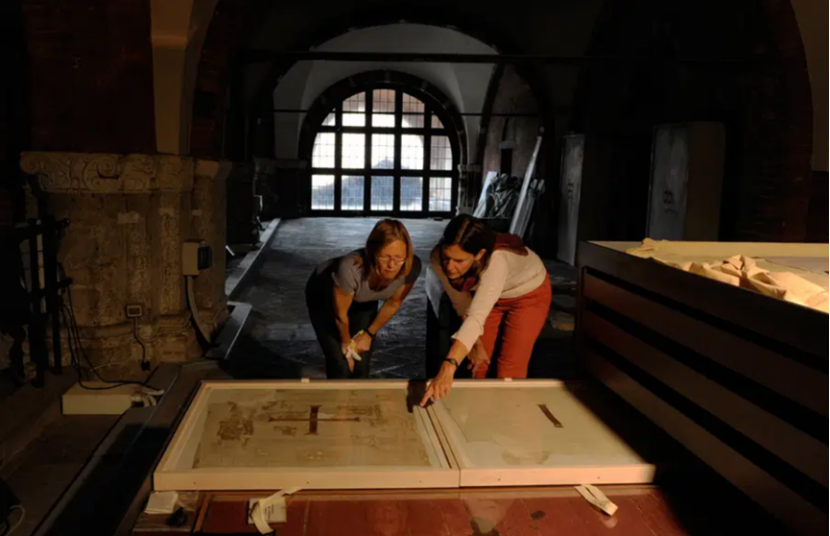
In the course of many centuries, time took its toll on these famous textiles. “If these fragile silk threads are to be preserved for a long time to come, it is critical to remove harmful layers of dust,” says Cologne textile restorer Ulrike Reichert, who has headed her own restoration workshop in the Dellbrück neighborhood for many years, specializing in preserving early silk textiles. The cloth is painstakingly cleaned with a tiny vacuum cleaner and delicate brushes. “For this we have had to carefully free the material from the protective glass that had been laid over it,” says Professor Schrenk’s colleague Katharina Neuser.
历经千百年的岁月侵蚀,这批著名丝织品已出现不同程度的损毁。科隆纺织品修复师乌尔丽克・赖歇特在戴尔布吕克区经营着自己的修复工坊,多年来专攻早期丝织品修复工作,她表示:“要让这些脆弱的丝线得以长久保存,清除其上的有害积尘层是关键步骤。”修复人员会使用微型吸尘器与细软毛刷,为织物精心除尘。萨宾娜・施伦克教授的同事卡特琳娜・诺伊泽补充道:“为开展修复工作,我们必须先将这些织物从覆盖其上的保护玻璃中小心拆解取出。”
Professor Schrenk and the team of restorers have taken their mobile lab to Milan several times in the last two years, with support from the Gielen-Leyendecker Foundation, to learn more about the origin and history of these textiles beyond the restoration works. “These pieces were revered as the tunics of St. Ambrose probably by the 11th century,” says Professor Schrenk. Aribert, the Archbishop of Milan, arranged for the placement of a textile band on the site where the tunics were kept. “It’s a kind of woven museum label indicating the significance of the relics,” says the Bonn scholar. Presumably, however, a red cross had already been sewn onto one of the vestments much earlier, as an indicator of their significance for the Church.
过去两年间,在吉伦-莱因德克基金会的资助下,施伦克教授与修复团队多次携移动实验室前往米兰,除开展文物修复工作外,更深入探寻这批丝织品的起源与历史脉络。施伦克教授指出:“至晚在11世纪,这批衣物就已被尊为圣安布罗斯的束腰外衣,成为基督教圣物。”当时的米兰大主教阿里贝特下令,在这批衣物的存放处悬挂一条织带,这位波恩大学的学者解释道:“这条织带宛如一件织就的博物馆标识,彰显着这批圣物的重要价值。”不过据推测,更早之前就已有一个红十字被缝在其中一件祭服上,作为其教会圣物身份的专属标识。
四、存藏变迁:数百年间的展陈与保护更迭
Centuries of Exhibition and Protection
These tunics have been kept and exhibited in various ways over the centuries. For a while they were stored packed in a chest, sandwich-like, between two other layers of fabric. Until the Second World War, the relics were kept in a frame mounted to an altar in the Basilica of Sant’Ambrogio; they then got new glass frames in the Basilica’s museum, where they remained until a few years ago. To protect them from the light they were then placed in storage drawers. “The pressure of heavy glass plates only aggravated the effect of many centuries of deterioration,” says Professor Schrenk. So the decision to have these valuable silks restored was made.
数百年来,这批束腰外衣的保存与展示方式几经更迭。曾有一段时间,它们被夹在另外两层织物之间,以类似三明治的方式收纳于木箱中。第二次世界大战前,这批圣物被装裱在圣安布罗焦大教堂祭坛的展框内;战后,它们被安置在教堂博物馆定制的全新玻璃展框中,这一状态一直延续至数年前。为避免光线对文物造成损害,工作人员随后将其收纳于储物抽屉中。施伦克教授说:“厚重玻璃压板产生的压力,只会加剧这些丝织品历经数百年的老化损伤。”也正因如此,修复这批珍贵丝织品的计划正式敲定。
While the project’s researchers and restorers have already made tremendous progress, they will still have their hands full in the coming years. “Based on the textiles, the Ambrose project reveals the evolution of early relic worship in a surprising way,” says Professor Schrenk. The project will also shed new light on the economic history of Late Antiquity. It is well known that silk was not yet produced in 4th-century Europe and Asia Minor; the expensive thread was imported from China. However, Professor Schrenk is skeptical about the scholarly consensus that all silks of the time were woven in the eastern Mediterranean, primarily in Syria. “Milan at the time, being the emperor’s residence, had access to ample patronage, and used silk in grand fashion. I would be very surprised if there had not been silk workshops there at the time,” says the archaeologist.
尽管该项目的研究人员与修复师已取得重大进展,但在未来数年里,他们仍有大量工作亟待推进。施伦克教授表示:“依托这批丝织品,圣安布罗斯研究项目以令人意想不到的方式,清晰揭示了早期圣物崇拜的发展演变。”同时,该项目也将为研究古代晚期的经济史带来全新视角。众所周知,4世纪时的欧洲与小亚细亚地区尚未掌握丝绸生产技术,这些昂贵的丝线均从中国进口。但学界一直存在一个主流观点,认为当时所有的丝织品均织造于地中海东部地区,其中叙利亚为核心产地,施伦克教授对这一观点提出了质疑。这位考古学家称:“彼时的米兰作为罗马帝国都城,备受皇室扶持,丝绸在当地的使用极为盛行。如果说当时的米兰并未设立丝织工坊,我会感到非常意外。”
内容来源|medievalists.net
转载请注明来源:世界丝绸网