琥珀蚕丝:阿萨姆邦日渐式微的文化遗产
Muga silk is an important cultural heritage of Assam and received a Geographical Indication (GI) tag for Assam in 2004. However, neo-liberal activities resulting in climate change is threatening muga culture where the livelihood of rearing and weaving communities of muga silk is at risk.
琥珀蚕丝是阿萨姆邦重要的文化遗产,2004年琥珀蚕丝获得了阿萨姆邦的地理标识(GI)认证。然而,新自由主义经济活动导致的气候变化正正威胁着姆珈(muga)文化,琥珀蚕养殖业和琥珀蚕丝的织造业的生计成了问题。
Unless there is a bottom-up approach to conceive and implement new policies and technologies to revive muga culture, the socio-economic conditions of the communities will deteriorate and lead to the gradual decline of this heritage.
如果没有自下而上的方法,没有新政和先进的科学技术的支持,穆加文化的复兴便无从谈起,丝绸行业的社会经济环境将进一步恶化,这一宝贵的文化遗产最终将走向灭亡。
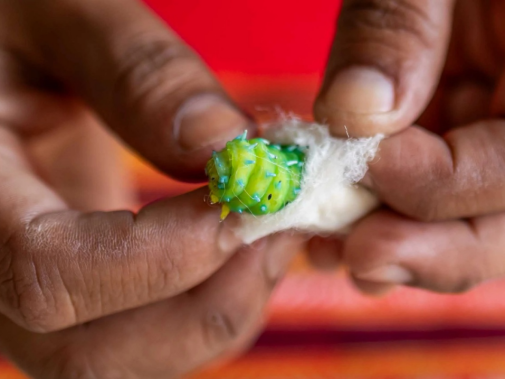
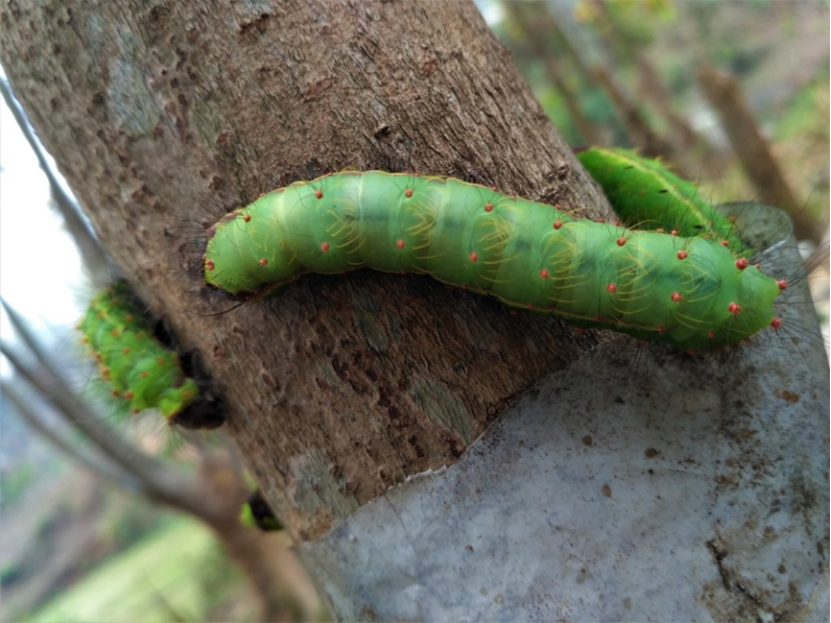
注:姆珈蚕,学名Antheraea assamensis,也称钩翅大蚕蛾。其蚕丝色泽金黄,似琥珀,又名琥珀蚕。
MUGA SILK AND ITS HISTORY IN THE INDIAN SUBCONTINENT
印度次大陆的琥珀蚕丝及其历史
India has a unique distinction of being the only country in the world to produce Mulberry, Eri, Muga and Tasar silks (Tikader et al. 2013). While muga silk is golden yellow in colour, eri is creamy white and both these silks have reflected the cultural and aesthetic traditions of the Assamese people. To know the exquisite art of silk creation, one has to understand the wonderful world of sericulture. In Assam, all the four varieties of silk are available as sericulture in the state comprises of muga silkworm (Antheraea assama), eri silkworm (Philosamia ricini), mulberry silkworm (Bombyz mori) and oak tasar silkworm (Antheraea prolei). A diversity of products, from traditional Assamese dresses like mekhela, sadar and riha for women and seleng sadar and eri sadar for men, to modern fashion ensembles, furnishings, upholstery, carpets, and rugs, are created from these magnificent fibres.
印度在世界纺织界有着独一无二的地位,它是世界上唯一一个能够同时生产桑蚕丝、蓖麻蚕丝(Eri)、琥珀蚕丝(Muga)、柞蚕丝(Tasar)的国家。琥珀蚕丝色泽金黄,蓖麻蚕丝却呈奶白色,尽管二者的颜色差异较大,但它们都承载并映射着阿萨姆邦人民的文化和美学传统。想要了解精湛的制丝工艺,就要走进奇妙的蚕桑世界。在阿萨姆邦,这四种丝绸皆有出产,因为该邦的养蚕业涵盖了琥珀蚕、蓖麻蚕、桑蚕和柞蚕。这些华美的丝纤维被用来制作各色产品:从传统的阿萨姆服饰,如女性的麦加拉裙、纱朵披巾和蕊哈披巾,男性的塞伦纱朵和艾瑞纱朵披巾;到现代的时尚套装、家居布艺、家具装饰织物、地毯以及小毯。
Muga silk is famously known as the Golden Silk or Queen of Silk of the world. It is endemic to Assam and other neighbouring Northeastern states and this silk has received the Geographical Indication tag in 2004 for Assam. The name ‘muga’ comes from the Assamese language which means a rich amber colour, representing the colour of the cocoon of the silkworm. The host plants in which the silkworm feed are Som and Soalu that are distributed throughout Northeast India and which grow up to an altitude of 1,500 feet above the mean sea level.
琥珀蚕丝素有“黄金丝绸”的美称,被尊为世界丝绸皇后。它原产于阿萨姆邦及印度东北部毗邻诸邦。2004年琥珀丝获得了阿萨姆邦的地理标识(GI)认证。“muga”这个名字出自阿萨姆语,意为浓郁的琥珀色,以指代琥珀蚕茧的颜色。琥珀蚕以楠木(som)、假柿木姜子(Soalu)为食,这两种宿主植物分布在印度东北部海拔1500英尺的地方。
In the Brahmaputra Valley, muga rearing and silk weaving are major activities in most households (especially in rural areas) other than agriculture. Women play a major role in weaving and rearing of silk that provides financial independence to them. Muga silk not only contributes to the improvement of livelihood, but it is deep-rooted in the culture and tradition of the people of Assam. Traditionally, Assamese families have been using muga for making the mekhela-sadar which is the traditional attire of Assamese women and this is worn during Bihu, the main festival of Assam. Many communities of Assam also consider muga silkworm as a cuisine in their diet.
在布拉马普特拉(Brahmaputra)河谷地区,琥珀蚕的养殖和琥珀丝的编织主要在农村地区的家庭作坊里完成,有别于传统的农业化生产。妇女是琥珀蚕养殖和蚕丝编织的主要参与者,这也让她们能够实现经济独立。琥珀蚕不仅改善了阿萨姆人们的生活水平,更是作为一种文化符号深深地植根于阿萨姆人民的文化传统之中。传统的阿萨姆家庭会用琥珀丝制作阿萨姆传统女士服装——配有莎朵披肩的麦加拉服,妇女们会穿着它参加比胡节(Bihu,阿萨姆邦的重要节日,比胡节与阿萨姆的农业周期紧密关联,全年分三次庆祝,分别对应播种、生长与丰收季,反映当地以水稻种植为核心的农耕社会结构)。阿萨姆邦的许多族群还把琥珀蚕当成一道美食。
Muga silk shimmers in its natural golden colour and is available in various shades of natural gold. It is also the highest priced among all other silk fibres. Unfortunately, muga silk has not been able to contribute much to Assam’s GDP. Sualkuchi, which is known as the ‘Manchester of Assam’ is the hub for muga silk weavers from pre-modern times. However, weaving of muga silk is hardly visible these days in Sualkuchi village due to various reasons which I explore further in this essay. As one can observe, there has been a gradual disappearance of the presence of muga silk in the lives of the Assamese community.
琥珀蚕丝具有媲美天然黄金的色泽,呈现出深浅不一的自然金色。和其他几种丝绸相比,琥珀蚕丝的价格最为高昂。很可惜,琥珀蚕丝对阿萨姆邦国内生产总值的贡献较小。苏阿尔库奇(Sualkuchi)被誉为阿萨姆邦的曼城,早在前现代时期就已经成为琥珀蚕丝的纺织中心。然而由于各种各样的原因,在如今的苏阿尔库奇,很难再看到织工纺织琥珀蚕丝的身影。就目前而言,琥珀蚕丝正渐渐淡出阿萨姆邦人民的生活。
注:Manchester,曼彻斯特,英格兰西北部工业城市,在18、19世纪发展成为英国棉纺织工业中心。
In all likelihood, sericulture spread to India from China, mainly into the valleys of the Brahmaputra and the Ganges around 140 BC (Deka, 2009). It is however, difficult to trace the exact period when muga sericulture began in Assam. There are accounts from Periplus manuscripts around the first century BC, and later from Ptolemy and Pliny on muga sericulture.
蚕桑业很有可能是从中国传入印度的,大约在公元前140年左右,主要传播至布拉马普特拉河与恒河流域。然而想要追溯姆珈文化在阿萨姆邦兴起的时间却相当困难。公元前一世纪左右的《厄立特里亚海周航志》有记载琥珀蚕的相关资料,后来托勒密和普林尼的著作中提及了琥珀蚕的养殖资料。
Muga sericulture earned royal patronage with various ruling dynasties such as the Kirats (AD 100-250), the Koches, the Kacharis and later the Ahom kings (AD 1228-1750). Chand Saudagar, a river and sea merchant of Eastern India pioneered the commercialisation of the muga thread around AD 300-450 from the eastern provinces of India. Muga was also traded with China through Tibetan merchants from Lhasa. The English initiated trade with Europe on muga through a deed of trade signed with King Gaurinath Singha in 1703 AD. During this period, the muga fabric, owing to its uniqueness commanded high demand in the markets overseas (Deka, 2009).
琥珀蚕丝业曾获得多个王朝的皇室扶持,包括基拉特王朝(公元100-250年)、科奇王国、卡查理王朝,以及后期的阿洪王朝(公元1228-1750年)。公元300至450年间,东印度河海商人旃陀·绍达伽尔首次实现琥珀蚕丝的商业化,其商业网络始自印度东部诸邦。印度和拉萨的藏族商人交易将琥珀蚕售入中国。公元1730年英国同印度的皇帝加里奈特·辛加签订贸易协定,英国是欧洲最早一个和印度交易琥珀蚕丝的国家。当时,琥珀蚕制成的布料绝无仅有,受到海外市场的追捧。
CHALLENGES
面临的挑战
Rearing of muga silkworm is done in the outdoors unlike many other silkworms. Muga silkworm is endemic to Assam and neighbouring Northeastern states due to the specific optimum temperature that is required to sustain the silkworm as it requires a temperature that ranges from 25°C to 27°C and humidity in the range of 75- 85 %. The optimum condition for rearing muga silkworm is 21- 31°C and 65 to 95% relative humidity (Tikader et al.,2013). Alteration of climatic factors such as relative humidity and temperature, affects almost all the aspects in the life cycle of silkworms taking their development and survival into account (Gohain & Borua, 1983).
与其他许多种类的蚕不同,琥珀蚕的养殖主要是在户外。琥珀蚕的最佳饲养环境需要将温度控制在25°C-27°C之间,同时还要将湿度控制在75%-85%之间,这与阿萨姆邦及印度东北部毗邻诸邦的气候重合,这也是为什么阿萨姆邦和印度东北毗邻诸邦会成为琥珀蚕的产地。温度在25°C-27°C,相对湿度在65%-95%的气候环境是琥珀蚕养殖的最佳环境。考虑到琥珀蚕发育和存活,相对湿度的改变会影响琥珀蚕几乎一整个生命周期。
As per the Indian Meteorological Department data, the mean temperature in Assam between 1950 to 2010 had increased by 0.01°C per year (Chakravartty, 2018). There has also been noticeable increase in temperatures across seasons, especially in the post-monsoon and winter temperatures. Such weather changes have affected the growth and production of muga silkworm as well as the livelihoods of their rearers and muga weavers too.
根据印度气象部门每年的数据,1950——2010年间,阿萨姆邦的平均气温每年上升0.01°C。跨季节时期的升温业相当惹眼,冬季和后季风时期的升温尤其明显。这样的气候变化会影响琥珀蚕的生长和琥珀蚕丝的产量,与此同时,蚕农和织工的生计也会受到影响。
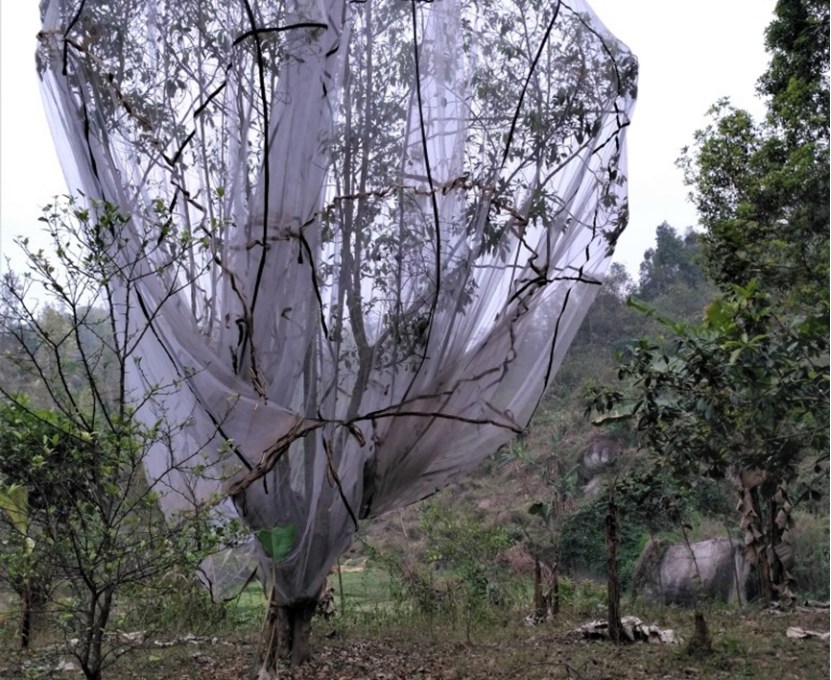
The establishment of tea plantations and rubber plantations near the rearing lands and the heavy use of pesticides and fertilisers have also adversely affected muga silkworms by causing various bacterial and fungal diseases. Muga silkworm seeds (eggs) are also in a vulnerable state due to release of various kinds of harmful gases and pollution due to industrial activities such as oil refineries and other extractive sector companies. P. R. Bhattacharya (1994) argues that the usage of pesticides in neighbouring tea gardens is the reason for destruction of the large scale muga culture in Upper Assam. She further argues that another cause for depletion of the muga silkworm is air pollution due to incineration of natural gases being produced from oil wells and seismic surveys by Oil and Natural Gas Corporation for the purpose of oil exploration and pollution from brick kilns.
琥珀蚕养殖基地附近茶园和橡胶园会使用大剂量的农药化肥,这些农药化肥对琥珀蚕有害,会引发各种病毒或真菌新的疾病。石油冶炼等采掘业企业的生产活动会排放多种有害气体和污染物,让蚕种变得相当脆弱——P.R。巴特查里亚(1994)称周边茶园使用的农药是上阿萨姆邦姆珈文化大规模消亡的罪魁祸首。她进一步指出印度石油和天然气公司勘探作业时的地震勘探所产生的污染还有砖窑焚烧和油井天然气放空燃烧产出的废气是空气污染的主要原因,上述工业活动所造成的空气污染是影响琥珀蚕繁殖的另一大原因。
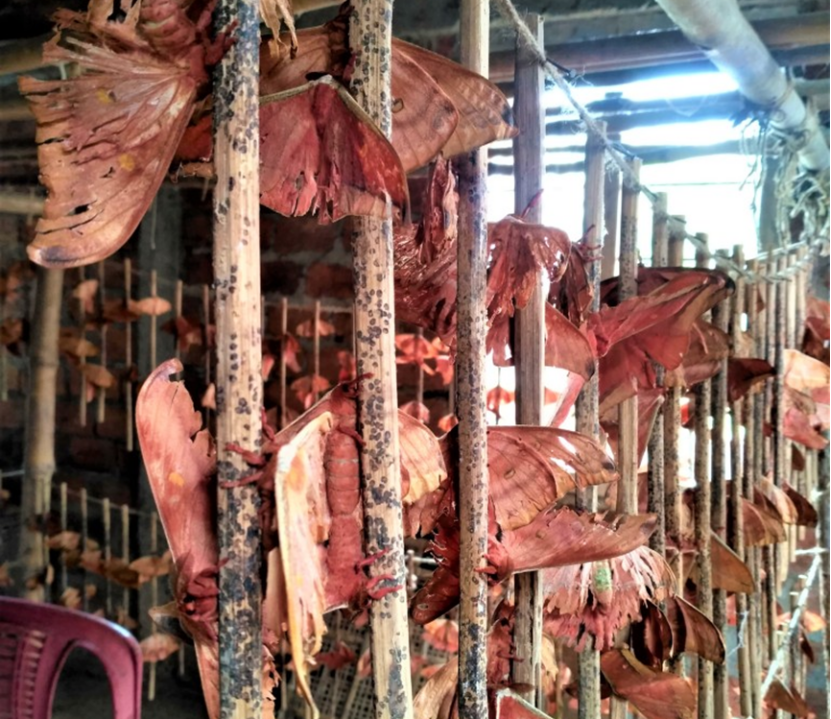
Over the years, many tea estates and rubber plantation activities have encroached on land for rearing muga silkworm. Few rearers have also given away land to these estates voluntarily due to the loss of their occupation and changed their professions to tea labourers. Such changes in land and labour patterns have also impacted the weaving communities in different parts of Assam. The growth of industrialisation, neo-liberalism along with global warming, has had adverse effects on muga silkworm and the livelihood of the communities dependent on this silkworm.
多年以来,茶园和橡胶园正在蚕食琥珀蚕饲养基地的生存空间。少数蚕农因生计无着,自愿将土地割让给这些种植园,转而成为采茶工。土地劳动力格局的转变已经殃及阿萨姆邦各地的纺织社群。工业化的推进伴随着新自由主义浪潮和全球变暖冲击着琥珀蚕的生存,更重创了依赖此蚕种谋生的社群生计。
The developments explained above, have made the silk dearer for any common person to buy. The decline in production of muga silk and the rising demand of muga silk outside the state and country has led to a rise in its price.
上文所述困境抬高了琥珀蚕丝的价格,琥珀蚕丝成为普通人难以触及的商品。琥珀蚕丝的产量下降,而外邦和国际市场对琥珀蚕丝的需求却在增加,最终导致琥珀蚕丝价格的增长。
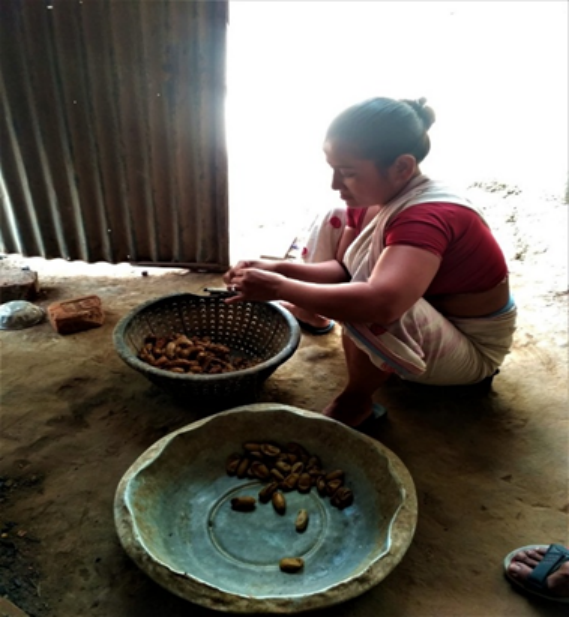
The gradual increase in the cost of the yarn as well as muga silk cloth started after the Assam Movement in the early 1980s, when tea plantation gained more popularity in the state which led to cutting down of host plants (Som tree) of muga silkworm in the rearing fields. Many rearers switched to tea cultivation mainly due to the seasonality of commercial muga rearing which restricts the occupation to only two months, while tea can be grown and produced with profit throughout the whole year.
20世纪80年代初期,阿萨姆邦开展了独立运动,当时国内茶园兴起,琥珀蚕养殖基地内的寄宿植物被砍除为茶园的修建腾出位置,之后琥珀蚕丝的成本便开始同琥珀纱一样逐渐增长。由于季节的限制,蚕农仅有两个月的时间,这两个月内蚕农既要饲养琥珀蚕又要完成相关商品的出售,而茶树种植却没有季节的限制,茶树全年可种,茶叶全年可产。这也是大部分蚕农转行做茶农的主要原因。
It is due to this low production of the muga silkworm and its raw material, that the price of the muga silk has simultaneously risen up. While Sualkuchi is one of the core places for production of silk, all the farms for rearing muga silk have closed down and rearing communities of Sualkuchi have shifted to other alternative livelihood sources such as daily wage labour, agricultural labour, etc. Such closures have been due to various environmental factors such as increase in humidity, erratic rainfall, increase in temperature and human factors such as urbanisation and pollution which lead to increase in mortality rate of the muga silkworm.
琥珀蚕的产量下降,琥珀蚕丝原材料的产量也跟着降,于是琥珀蚕丝的价格便随之升高。尽管苏阿尔库奇是丝绸生产的中心,城内所有饲养琥珀蚕的农场却都已经关停。饲养社群的蚕农也改行专业,投入日薪劳工、农民等工作。农场的关停受到各种环境和人文因素的影响:气温和湿度的上升,秋季的不稳定变化,城市化以及环境污染等因素让琥珀蚕的致死率升高。
Muga silk weavers in Sualkuchi collect raw material from nearby places such as Palasbari and Boko, but many rearers themselves have started to weave due to low production and because selling of a small number of raw materials will only be a loss to their economy. Most of the muga xhal in Sualkuchi have been converted into paat xhal, which is used to weave mulberry silk, for income generation. Hence, what once gave Sualkuchi its pride and heritage has left all its footprints.
苏阿尔库奇的丝织工从附近的帕拉沙巴里(Palasbari)和博科(Boko)采购原材料。然而,许多蚕农自己却开始织了丝。因为琥珀蚕的产量过低,蚕农如果只是出售少量的原料,他们不仅不能赚钱反而还要亏损。苏阿尔库奇的大多数琥珀蚕丝哈勒(手织机)已被改造成帕特(桑蚕丝)哈勒,用于织造桑蚕丝以创收。因此,曾经赋予苏阿尔库奇骄傲与传承的琥珀蚕业,如今已踪迹难寻。
PRESENT SCENARIO
当下的设想
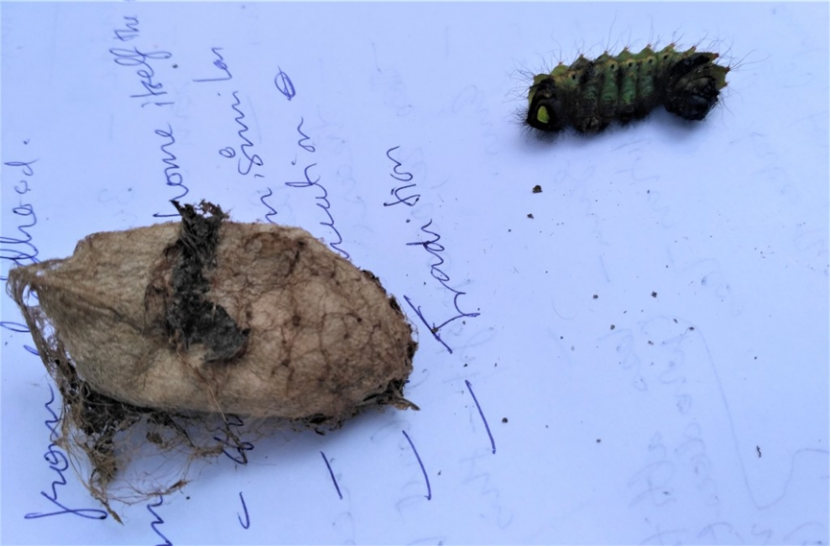
The livelihood and the socio-economic status of rearers and weavers have deteriorated with the changes in their occupation, wage, income generation and so on. Consequently, this has also impacted the health of these communities and the education of children. Introduction of modern machines for weaving and scientific technology for disease free laying (DFL) muga silkworm egg production and extraction of silk yarn can lead to an increase in the production of muga silkworm and create a suitable life for the communities who are related to muga culture.
职业、工资、收入等方面的变化,影响了蚕农和织工的生计及社会经济地位。因此,这也影响了这些社区的健康状况和儿童的教育。引入现代化的织布机械,以及用于生产无病蚕卵(DFL)和提取丝线的科学技术,可以提高穆加金丝蚕的产量,并为从事琥珀蚕养殖相关工作的社群创造更舒适的生活环境。
Although new rearing methods have been introduced in certain areas, rearers are apprehensive about these methods due to lack of awareness and also for a preference towards traditional methods of rearing. Most of these newly introduced machines in rearing and weaving communities have been done so by the government through a top down approach without any grassroots involvement.
虽然某些地区已经引进了新的养殖方法,蚕农自身认知有限,相较于新技术他们更愿意用传统的办法养蚕。对于这些新技术,蚕农仍持怀疑态度。这些在养殖和编织社区中引进的新机器,大多数是由政府高层引进,基层相关从业者并未参与机器的引进。
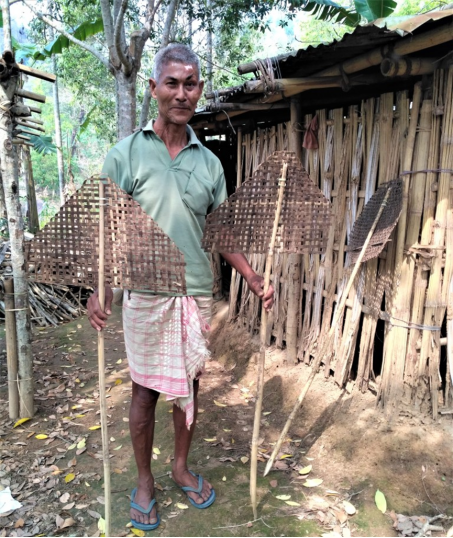
There are overlapping factors that is leading to the diminishing of muga culture in Assam. Other than climate change and developmental activities, urbanisation and neo-liberal policies have motivated the new generation of weaver and rearer communities to search for alternative livelihood opportunities. People have been migrating from rural to urban areas for education, job opportunities, daily wage labour and a better standard of living.
导致阿萨姆邦穆加文化日渐式微的因素错综复杂。除气候变化和开发活动外,城市化进程与新自由主义政策也促使新一代织工和养蚕人另谋出路。为寻求教育、工作机会、日薪劳动和更好的生活水平,人们正不断从农村涌向城市。
To ensure the survival of this heritage and to improve the production of muga silk which will attract the new generation to continue the tradition, there needs to be adoption of better policies, development of skills and implementation of better programs and schemes that are done through a participatory bottom-up approach. But these steps may not be enough, if anthropogenic activities fueled by capitalism which negatively impact the environment and climate like burning of fossil fuels, deforestation, pollution and so on, are also not countered.
为确保这一珍贵文化遗产得以传承,并提升琥珀蚕产量(从而吸引新一代延续这一传统),亟需制定更完善的政策、提升相关技能水平,并通过自下而上、充分参与的方式来落实更有效的计划与方案。然而,若不同时遏制那些受资本逐利驱动、严重破坏环境与气候的人为活动——如燃烧化石燃料、滥伐森林、制造污染等——那么上述努力恐怕仍难以奏效。
内容来源|The Dwima Collective
转载请注明来源:世界丝绸网